Evaluating 3D Rainbow Alphabet Letters Sublimation Assets for Professional Design
In the competitive landscape of digital design and print-on-demand products, sourcing high-quality typography assets is a constant challenge for creators. The 3D Rainbow Alphabet Letters Sublimation set represents a specific category of digital resource that bridges the gap between playful aesthetics and professional production requirements. For designers, educators, and small business owners operating in the children’s market or event planning sector, understanding the technical specifications and practical applications of this asset is essential before integration into a commercial workflow. This evaluation examines the utility, quality, and limitations of this specific PNG-based alphabet collection to determine its viability for serious design projects.
Technical Specifications and Production Readiness
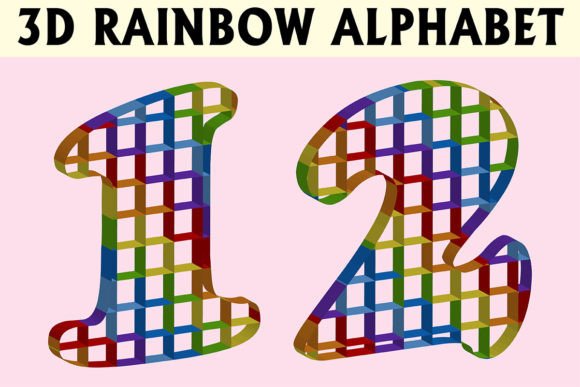
The primary value proposition of any sublimation asset lies in its technical fidelity. This 3D Rainbow Alphabet Letters Sublimation package is engineered with production standards in mind, specifically targeting the requirements of dye-sublimation printing and high-resolution digital display. The files are provided at 3600 x 3600 pixels with a resolution of 300 DPI (dots per inch). This specification is significant because it exceeds the standard screen resolution of 72 DPI and meets the minimum threshold for crisp physical printing. At this size, each letter can be printed up to 12 inches square without pixelation, making the asset suitable for large-format applications such as wall decals, tote bags, or party banners.
The inclusion of a transparent background is a critical feature for workflow efficiency. Unlike JPEG formats that require tedious masking or background removal, these PNG files allow for immediate layering over complex textures, patterns, or colored backgrounds. For professionals managing high-volume orders or tight deadlines, this pre-processed transparency reduces preparation time significantly. The set includes 26 letters and 10 numbers, providing a complete alphanumeric system necessary for personalized merchandise. However, users should note the absence of special characters or punctuation, which may limit utility for certain text-heavy designs requiring full sentence structures.
File Format Limitations and Workflow Considerations
It is imperative to distinguish what this product is not. The documentation explicitly states that this is a PNG file only and not a cut file SVG. This distinction fundamentally dictates how the asset can be used. Crafters utilizing vector-based cutting machines like Cricut or Silhouette for vinyl applications will find this format unsuitable for precision cutting. While the high contrast of the 3D rainbow style might allow for auto-tracing in some software, the results are often imperfect compared to native vector paths.
Conversely, for sublimation workflows, PNG is the preferred industry standard. Sublimation relies on raster image transfer rather than vector cutting paths. Therefore, the lack of SVG functionality does not diminish the value for its intended purpose; rather, it streamlines the file structure for inkjet transfer processes. Professionals must ensure their project goals align with raster-based output before acquisition. If the objective is heat transfer vinyl (HTV) or adhesive vinyl lettering, alternative vector resources are required. If the goal is sublimation mugs, tumblers, apparel, or digital composite design, this format is optimal.
Practical Applications Across Creative Disciplines
The versatility of 3D Rainbow Alphabet Letters Sublimation extends beyond simple t-shirt graphics. The aesthetic—vibrant, dimensional, and multicolored—targets specific demographics effectively. Evaluating real-world use cases reveals several high-value applications for entrepreneurs and creatives.
- Personalized Children’s Decor: The 300 DPI resolution supports nursery wall art and name signs. The 3D effect adds visual depth that flat typography lacks, creating a premium perception in handmade decor markets.
- Educational Materials: Teachers and homeschool educators can utilize these high-contrast letters for flashcards, classroom posters, and learning binders. The rainbow color coding aids in visual retention and engagement for early learners.
- Event Stationery and Signage: For birthday parties or baby showers, these letters serve as consistent branding elements across invitations, welcome signs, and cupcake toppers. The cohesive style ensures a professional look even when mixing different printed items.
- Digital Content Creation: Bloggers and social media managers can use the transparent PNGs to create engaging headers, Pinterest pins, or YouTube thumbnails. The bright colors perform well in algorithmic feeds where visual pop drives click-through rates.
For small business owners, the consistency of the typeface across all 36 characters ensures brand uniformity. Mixing mismatched fonts from free sources often results in a disjointed customer experience. A dedicated asset pack like this provides a reliable design foundation that maintains visual integrity across an entire product line.
Assessing Visual Quality and Market Fit
The "3D Rainbow" aesthetic occupies a specific niche. It is inherently youthful, energetic, and informal. From a marketing perspective, this limits its applicability to corporate, luxury, or minimalist sectors but maximizes its effectiveness in family-oriented and celebratory markets. The rendering quality of the 3D effect is crucial; poor shading can make digital letters appear flat or amateurish. High-quality illustrations in this set utilize lighting and shadow to create genuine volume, distinguishing them from basic clip art.
When evaluating long-term value, consider the timelessness of the design. Rainbow palettes have remained a staple in children's design for decades, suggesting this asset will not become obsolete quickly. However, trends in 3D rendering evolve. Users should assess whether the specific lighting style matches current market preferences or if it leans towards a retro aesthetic. Currently, bold, saturated 3D typography is trending in both digital and print spaces, indicating strong immediate relevance.
Integration with Existing Design Systems
For freelancers and agencies, integrating new assets requires compatibility testing. These PNG files are universally compatible with major design software including Adobe Photoshop, Illustrator, Canva, Affinity Photo, and Procreate. The 3600px dimension strikes a balance between detail and file size; they are large enough for print but manageable enough to avoid crashing lower-spec tablets or laptops during editing sessions.
Professionals should also consider color management. Sublimation printing often results in color shifts due to printer profiles and substrate variations. Because these letters use a broad spectrum of rainbow colors, proofing is recommended. The vibrancy seen on-screen may differ on polyester fabric or ceramic coatings. Having a high-resolution source file allows for color correction and adjustment curves to be applied non-destructively, ensuring the final physical product matches the digital proof.
Strategic Recommendations for Professional Users
To maximize the return on investment for 3D Rainbow Alphabet Letters Sublimation, users should adopt a strategic approach to implementation. First, organize the asset library immediately upon download. Renaming files to include descriptive tags (e.g., "Rainbow3D_A.png") facilitates faster searching within design software asset panels. Second, create template files for recurring products. If you sell personalized mugs, build a master template with the correct bleed and safe zones, keeping the alphabet layers accessible for rapid customization.
Be mindful of licensing and usage rights. While the technical quality is high, professional use depends entirely on the specific license agreement provided with the ZIP file. Verify whether the license permits commercial end-products, digital redistribution, or modification. Ethical and legal compliance is as important as technical capability in professional practice.
Finally, manage client expectations regarding customization. Since these are raster images, you cannot change the font weight, kerning, or individual letter colors without advanced photo manipulation. Communicate clearly with clients that personalization is limited to arrangement and sizing, not typographic alteration. This transparency prevents revision cycles and ensures the asset is used within its functional parameters.
Ultimately, 3D Rainbow Alphabet Letters Sublimation serves as a specialized tool rather than a universal solution. Its strength lies in delivering high-resolution, print-ready typography for specific markets where color and dimension drive engagement. For professionals whose work intersects with education, children's retail, or celebration events, this asset offers a practical combination of quality and convenience. By understanding its technical boundaries and leveraging its visual strengths, designers can integrate this resource effectively into profitable and creative workflows. Success depends not just on owning the file, but on applying it with technical precision and market awareness.