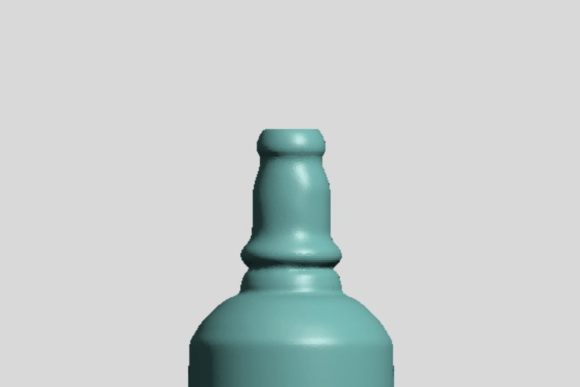
Olive Oil Bottle Earrings: A 3D Printable Guide
Fashion and home decor often draw inspiration from the most unexpected places, and culinary aesthetics are currently having a major moment. Olive oil bottle earrings represent a perfect intersection of foodie culture, sustainable fashion, and additive manufacturing technology. At its core, this concept revolves around a versatile 3D printable olive oil bottle replica that serves dual purposes depending on how you choose to manufacture it. Whether you are looking for a quirky conversation starter at your next dinner party or a rustic accent piece for your kitchen shelving, this digital model adapts to your specific needs through simple scaling adjustments.
The appeal lies in the customization that only 3D printing can provide. Unlike mass-produced jewelry or generic store-bought decor, a printed replica allows you to control every aspect of the final object. You can adjust the size to create delicate wearable art or enlarge the file to produce a substantial decorative vessel. This flexibility makes the STL file an invaluable asset for creators who want to bridge the gap between digital design and tangible, functional objects. It transforms a standard digital asset into either a personal style statement or an interior design element with equal ease.
Choosing the Right Printing Technology for Jewelry
If your primary goal is to create olive oil bottle earrings, the choice of printing technology is the single most important factor in achieving a professional result. While Fused Deposition Modeling (FDM) printers are excellent for large prototypes and structural parts, they generally lack the resolution required for high-quality jewelry. Layer lines on a small earring can look rough and unfinished, requiring hours of sanding and polishing to become wearable. For accessories that sit against the skin and are viewed up close, precision is non-negotiable.
Stereolithography (SLA) is typically the recommended method for this application. Resin printing offers exceptional detail and smooth surface finishes right off the build plate. The layer heights used in SLA printing are often measured in microns, resulting in a miniature bottle that captures subtle curves, embossed text, and realistic proportions without visible stepping. This level of fidelity ensures that the earrings look like intentional fashion pieces rather than plastic novelties.
Selective Laser Sintering (SLS) is another superior option, particularly if durability is a concern. SLS uses nylon powder to create parts that are lightweight yet incredibly strong. Unlike resin, which can sometimes be brittle, SLS prints have a slight flexibility that is ideal for jewelry that might get bumped or dropped. The matte, textured finish of SLS nylon also provides a unique aesthetic that differs from the glossy look of resin, offering a more organic feel that complements the natural theme of olive oil. Both technologies eliminate the need for support structures in complex geometries, preserving the integrity of the bottle’s neck and handle details.
Scaling Up for Home and Office Decor
The same STL file that produces delicate jewelry can be transformed into a striking decoration element simply by increasing the scale in your slicer software. When printed at a larger size, the olive oil bottle replica transitions from an accessory to a sculptural object. This versatility is particularly useful for entrepreneurs running print-on-demand businesses or hobbyists looking to maximize the utility of their digital library. Instead of purchasing separate files for different product categories, one well-designed model serves multiple market segments.
In a residential setting, these larger replicas work beautifully as part of a Mediterranean or farmhouse-themed kitchen display. They can be arranged on open shelving, used as bookends, or placed on a dining table as a centerpiece. Because they are hollow or solid plastic rather than glass, they offer the visual warmth of traditional ceramics without the risk of breakage. This makes them practical for households with children or pets where fragile glass decor might be hazardous.
For professional environments, such as culinary offices, restaurants, or food marketing agencies, these prints serve as thematic branding elements. A large-scale olive oil bottle on a reception desk or conference table subtly reinforces a brand identity related to gastronomy, health, or sustainability. Educators and workshop leaders can also use enlarged versions as teaching aids when discussing packaging design, cultural history, or 3D modeling techniques, providing a physical reference point that is safe to handle and pass around a classroom.
Practical Considerations Before You Print
Before sending the STL file to your printer, there are several practical factors to consider to ensure success. First, verify the wall thickness relative to your chosen scale. A wall thickness that works perfectly for a two-inch earring may be too thin for a ten-inch vase, leading to structural weakness during printing or post-processing. Always check the minimum wall thickness recommendations for your specific printer and material.
Post-processing requirements also vary significantly between scales. Small earrings require careful washing and curing to remove all uncured resin, as skin sensitivity is a real concern. Using hypoallergenic hooks and ensuring the print is fully inert is essential for wearer comfort. Larger decorative pieces may require seam sanding or priming if you plan to paint them to resemble ceramic or glass. Consider whether you want a realistic finish or a stylized, artistic look before beginning the finishing process.
- Material Safety: Ensure any resin used for earrings is biocompatible or fully cured to prevent skin irritation.
- Weight Management: For earrings, consider hollowing out the model in your CAD software to reduce weight and improve wearability.
- Orientation: Orient the bottle horizontally for earrings to minimize supports on visible surfaces, but vertically for large decor to maximize strength along the Z-axis.
- Hardware Integration: Plan how you will attach earring hooks or jump rings before printing; drilling into small resin parts can cause cracking.
Understanding the Digital Asset Format
The project utilizes the .stl extension, which is the industry standard for 3D printing. This format represents the surface geometry of the olive oil bottle using triangular meshes. It is universally compatible with virtually all slicing software, making it accessible regardless of whether you use a Bambu Lab, Elegoo, Prusa, or Formlabs machine. However, because STL files do not contain color or texture information, the aesthetic outcome relies entirely on your material choice and post-processing skills.
For those new to working with STL files for jewelry, it is helpful to inspect the mesh density before printing. Jewelry models require a higher polygon count to appear smooth at small scales. If the bottle looks faceted or blocky in your preview window, the file resolution may be too low for earring production, even if it looks acceptable for large decor. Conversely, extremely high-poly files can slow down slicing software unnecessarily when printing large decorative versions. Understanding these technical nuances helps you get the best results from your olive oil bottle earrings and decor projects, ensuring that the transition from digital file to physical object is seamless and satisfying.