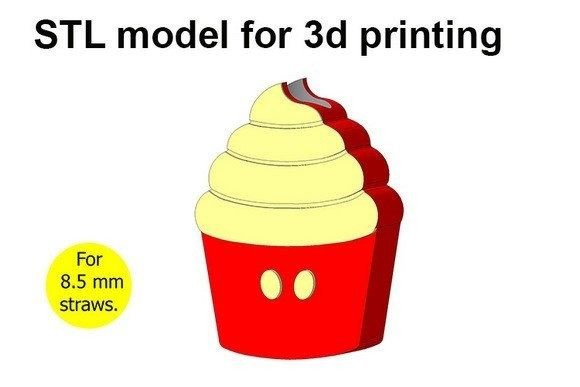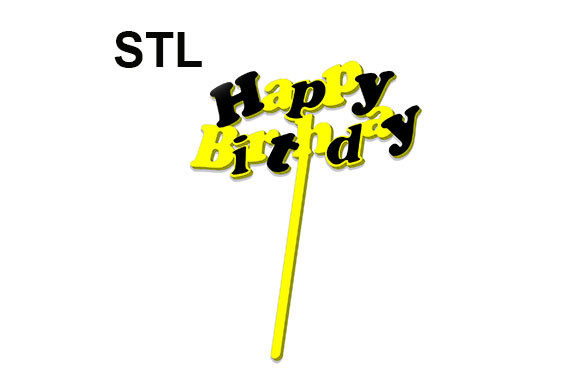
3D Printed Cupcakes Topper: Custom STL File Guide
Elevating your baking presentation has never been more accessible than with a custom 3D printed cupcake topper. This digital product provides a high-quality STL file designed specifically for home bakers, event planners, and 3D printing enthusiasts who want to add a personalized touch to their confections. Rather than purchasing generic plastic decorations that lack character, this downloadable resource empowers you to manufacture professional-grade cake accessories in your own home or workshop. The design features variable letter thicknesses and supports dual-color printing, allowing for creative flexibility that standard store-bought items simply cannot match.
Understanding the Digital Product Format
It is crucial to understand exactly what you are acquiring before downloading. This listing is for a digital file only. No physical item will be shipped to your address. You will receive one ZIP archive containing a single STL file, which is the industry-standard format for 3D printing. This means you must have access to a functioning 3D printer and basic slicing software to utilize this product. For makers and small business owners, this digital-first approach offers significant advantages. You can print as many toppers as needed without waiting for shipping, making it perfect for last-minute party preparations or fulfilling custom bakery orders on tight deadlines.
The beauty of owning the source file lies in its adaptability. Unlike fixed-size retail products, this STL can be scaled within your slicer software. Whether you need miniature accents for petit fours or larger statement pieces for standard cupcakes, you can reduce or enlarge the model while maintaining structural integrity. This scalability makes the file a versatile asset in your digital library, suitable for various dessert sizes and event themes.
Creative Applications and Dual-Color Printing
The primary appeal of this cupcake topper is its aesthetic versatility. The design incorporates varying thicknesses in the lettering, which creates visual depth and shadow play that flat vinyl or paper toppers lack. More importantly, the geometry is optimized for two-color printing. By utilizing color changes at specific layer heights or using a multi-material system, you can create striking contrasts between the text and the base structure. Imagine a white script against a pastel pink background, or gold letters atop a chocolate brown foundation. This capability allows you to coordinate perfectly with party themes, brand colors, or seasonal palettes.
- Birthday Parties: Create age-specific or name-specific toppers that match the balloon arch or tablecloth.
- Bakery Businesses: Offer premium customization for clients willing to pay extra for bespoke details.
- Wedding Showers: Print elegant, uniform toppers for dozens of cupcakes at a fraction of the cost of acrylic alternatives.
- School Events: Use school colors to show spirit during fundraisers or celebrations.
- Content Creation: Food bloggers and influencers can produce unique props that make their photography stand out on social media feeds.
Optimizing Your Slicer Settings for Success
Achieving a food-safe appearance and structural durability requires specific printer configurations. While every machine differs, adhering to recommended settings ensures the best possible outcome for this particular geometry. The designer suggests a layer height of 0.15mm. This finer resolution captures the intricate curves of the lettering much better than the standard 0.2mm, resulting in smoother surfaces that require less post-processing.
Structural integrity is equally important, especially since these toppers will be inserted into soft cake. An infill density of 23% strikes the ideal balance between material efficiency and rigidity. Too little infill may cause the stem to snap during insertion, while excessive infill wastes filament and time. For surface quality, set your top solid layers to 7 and bottom solid layers to 4. This generous number of solid layers ensures that the top surface is completely smooth and opaque, hiding any internal infill patterns that could detract from the professional finish. Finally, use 2 outline perimeters (shells). This reinforces the outer walls, providing a clean edge definition that is essential for readable text and a polished look.
Material Safety and Practical Considerations
When creating items intended for food contact, material choice matters as much as print settings. Always use certified food-safe filaments such as PLA or PETG from reputable manufacturers. Avoid ABS or ASA for direct food contact due to potential toxicity concerns. Additionally, consider the hygiene aspects of 3D printed objects. Layer lines can harbor bacteria over time, so these toppers are best treated as single-use decorative items or thoroughly sanitized between uses if made from dishwasher-safe materials. Many professionals prefer to insert the topper into a food-safe pick or straw rather than placing the plastic directly into the cake, adding an extra layer of safety and stability.
Before starting your print, verify your bed adhesion. Because toppers often have a relatively small footprint on the build plate, using a brim or raft can prevent warping or detachment during the initial layers. Since the design includes thin sections, ensure your cooling fan is calibrated correctly to prevent sagging or blobbing on the detailed letterwork. Taking five minutes to dial in these parameters can save hours of failed prints and wasted material.
Maximizing Value for Makers and Entrepreneurs
For those running a side hustle or small bakery, this STL file represents a low-overhead value add. The cost of filament for a single topper is negligible, yet the perceived value to a customer can significantly increase the price point of a dozen cupcakes. By mastering the recommended settings and color change techniques, you transform a simple digital file into a revenue stream. Educators and STEM instructors can also leverage this project to teach students about digital fabrication, scaling, and practical design applications in a tangible, delicious context.
Remember that this product places the power of production entirely in your hands. There is no middleman, no inventory risk, and no shipping delay. Once downloaded, the file is yours to use repeatedly. Whether you are preparing for a child’s birthday, launching a new menu item, or simply exploring the creative possibilities of your 3D printer, this cupcake topper serves as an excellent bridge between digital design and real-world celebration. Just ensure you have your printer ready, your filament loaded, and your slicer configured before you begin bringing your edible visions to life.