Elevating Drinkware Aesthetics with Bow and Sunflower Straw Toppers
The intersection of functional design and decorative artistry has found a vibrant expression in the realm of 3D printed drinkware accessories. Among the most charming and versatile designs currently available for digital fabrication are Bow and Sunflower straw toppers. These small yet impactful objects serve as more than mere ornamentation; they represent a convergence of practical engineering, sustainable material use, and personalized event styling. For makers, event planners, educators, and hobbyists, understanding the nuances of printing and utilizing these specific designs unlocks a wide array of creative and commercial possibilities.
Technical Specifications and File Architecture
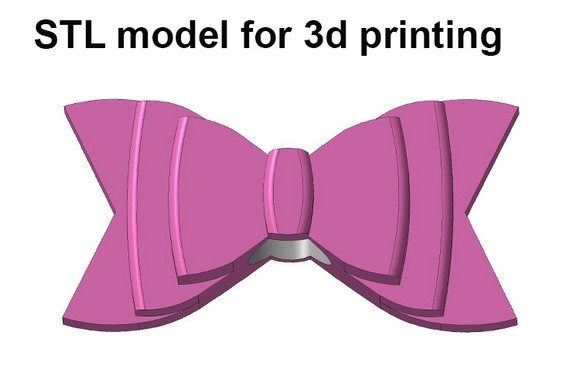
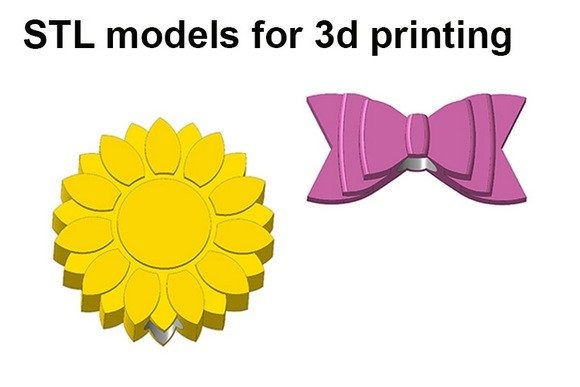
Successful fabrication begins with a clear understanding of the digital assets. The Bow and Sunflower straw toppers are distributed as digital STL files, ensuring immediate compatibility with virtually all modern slicing software and FDM (Fused Deposition Modeling) printers. The product architecture is streamlined for user convenience, packaged within a single ZIP archive containing two distinct STL files. This separation allows users to print the bow and sunflower designs independently or simultaneously, depending on their production needs and bed capacity.
A critical dimensional constraint defines the utility of these models: they are engineered specifically for 8.0 mm straws. This standard diameter corresponds to regular drinking straws rather than wide-bore boba or smoothie straws. Makers must verify their straw inventory before beginning a print run to ensure a proper friction fit. The tolerance built into these digital files accounts for standard manufacturing variances in disposable and reusable straws, but the 8.0 mm specification remains the baseline for optimal performance. Deviating from this size may result in toppers that are either too loose to stay in place or too tight to install without damaging the straw.
Optimizing Print Parameters for Decorative Durability
Achieving the delicate balance between aesthetic detail and structural integrity requires adherence to specific slicer settings. While many decorative prints prioritize speed over quality, straw toppers endure mechanical stress during insertion, removal, and washing. The recommended layer height of 0.15mm is non-negotiable for this application. This resolution captures the intricate petals of the sunflower and the soft folds of the bow while maintaining reasonable print times. Thicker layers would obscure these fine details, resulting in a blocky appearance unsuitable for close-up viewing at events.
Infill density presents another optimization opportunity. The recommended 23% infill provides sufficient internal support to prevent crushing when users grip the topper, without wasting material or extending print duration unnecessarily. This percentage creates a lattice structure that absorbs compressive forces while keeping the object lightweight. For the external surface finish, the recommendation of two outline perimeters (shells) ensures that the visible walls are smooth and continuous, preventing the infill pattern from showing through translucent filaments.
Perhaps the most crucial setting for functional longevity involves solid layers. The specification calls for seven top solid layers and four bottom solid layers. This asymmetry addresses the unique stress profile of a straw topper. The top surfaces, particularly the sunflower face and bow loops, require substantial thickness to bridge gaps cleanly and resist wear from handling. The bottom layers, while fewer in number, must be robust enough to anchor the model to the build plate and provide a clean interface where the topper meets the straw. Neglecting these solid layer counts often results in fragile prints that crack along layer lines after minimal use.
Material Selection and Safety Considerations
While the STL files define geometry, material choice determines safety and suitability. For any object intended for food-adjacent use, PLA (Polylactic Acid) remains the preferred filament due to its biodegradability and low toxicity. However, makers should select virgin PLA rather than recycled blends when printing items that will contact beverages. PETG offers superior durability and heat resistance, making it suitable for dishwasher-safe reusable toppers, though it requires higher printing temperatures and may struggle with the fine details at 0.15mm layer heights.
Color selection extends beyond aesthetics to encompass hygiene considerations. Lighter colors and natural filaments make it easier to spot residue or contamination, an important factor for reusable applications. Dark or heavily saturated colors may hide debris, requiring more rigorous cleaning protocols. For professional event use, matching filament colors to party themes creates cohesive visual branding, while neutral tones offer versatility across multiple occasions.
Applications Across Professional and Personal Contexts
The versatility of Bow and Sunflower straw toppers manifests differently across user segments. Event coordinators leverage these designs to create Instagram-worthy beverage stations at weddings, baby showers, and garden parties. The sunflower motif aligns naturally with rustic, farmhouse, or summer themes, while the bow adds a touch of classic elegance suitable for formal gatherings. Because these are digital files, coordinators can scale production precisely to guest counts, eliminating waste associated with bulk purchasing pre-made decorations.
Educators and STEM program directors find unexpected value in these models as teaching tools. The combination of organic shapes (sunflower petals) and geometric curves (bow ribbons) introduces students to complex slicing concepts and support structure management. Printing functional objects that peers can actually use increases engagement compared to abstract calibration cubes. The 8.0 mm tolerance requirement also serves as a practical lesson in real-world engineering constraints and measurement precision.
Small business owners operating mobile bartending services or café pop-ups utilize custom straw toppers as low-cost brand differentiators. A signature sunflower topper becomes part of the customer experience, encouraging social media sharing and repeat visits. The ability to print replacements on-demand eliminates supply chain dependencies and allows rapid iteration based on customer feedback. Seasonal variations can be produced by simply swapping filament colors while using the same base geometry.
Troubleshooting Common Fabrication Challenges
Even with optimized settings, certain issues may arise during production. Bed adhesion problems frequently affect the sunflower design due to its relatively small first-layer footprint. Using a brim or raft can mitigate warping, though these require post-processing removal. Alternatively, adjusting first-layer flow rate or bed temperature may improve initial adhesion without additional structures. For the bow design, bridging failures between ribbon loops indicate insufficient cooling or excessive print speed. Reducing fan speed for the first few layers after supports, then increasing to maximum, often resolves this issue.
Fit issues typically stem from printer calibration rather than file defects. If toppers consistently fail to seat properly on 8.0 mm straws, horizontal expansion compensation in the slicer can adjust dimensions without modifying the source STL. A negative horizontal expansion value shrinks holes slightly, while positive values enlarge them. Documenting successful compensation values for specific printer-filament combinations creates a valuable reference library for future prints.
Surface artifacts on curved surfaces may indicate inconsistent extrusion or retraction settings. The bow's flowing geometry particularly exposes z-seam placement issues. Positioning the z-seam along sharp corners or using random seam placement distributes visible imperfections more evenly. Post-processing with light sanding or vapor smoothing can elevate prints to commercial quality, though this adds labor time that must be factored into cost calculations.
Sustainability and Lifecycle Management
Digital fabrication inherently supports sustainability goals by enabling on-demand production and eliminating shipping emissions associated with physical goods. PLA-based Bow and Sunflower straw toppers are compostable under industrial conditions, offering an end-of-life pathway superior to conventional plastic decorations. For reusable applications, establishing clear cleaning and sanitization protocols extends product lifespan significantly. Commercial users should implement rotation systems to distribute wear evenly across inventory.
The digital nature of these files also facilitates community-driven improvement. Makers who develop successful modifications or alternative sizing can share derivative works, expanding the ecosystem beyond the original designer's vision. This collaborative approach accelerates innovation and ensures long-term relevance as straw standards evolve or new materials emerge. Maintaining organized file libraries with version notes helps track which iterations perform best under specific conditions.
Understanding the complete lifecycle—from digital file through printing, use, and disposal—enables informed decision-making about when and how to deploy these decorative elements. Whether serving hundreds of guests at a corporate gala or teaching basic 3D printing principles in a classroom, Bow and Sunflower straw toppers demonstrate how thoughtful digital design translates into tangible value across diverse contexts. Mastery of the technical parameters combined with creative application ensures these charming accessories continue to enhance beverage experiences while showcasing the capabilities of accessible manufacturing technology.