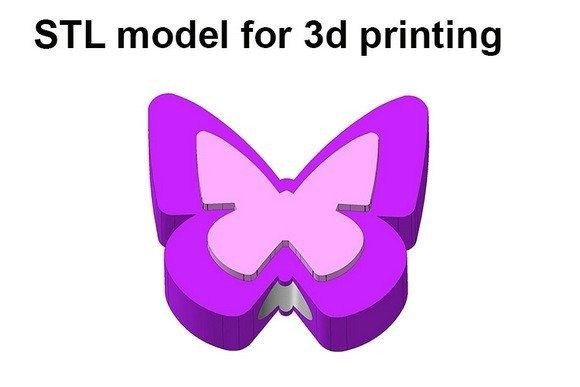
Evaluating the Double Layer Butterfly Straw Topper for 3D Printed Party Decor
When planning event decor or personalized drinkware accessories, the distinction between mass-produced plastic items and customized 3D printed solutions often comes down to design complexity and functional fit. The Double Layer Butterfly Straw Topper represents a specific niche within digital fabrication files that prioritizes visual depth over simple silhouettes. Unlike standard single-layer charms that rely solely on outline shape for recognition, this design utilizes vertical stacking to create dimensionality. For makers and event planners comparing options for beverage garnishes, understanding the technical and aesthetic implications of this double-layer construction is essential for determining if it aligns with project goals.
Structural Differences: Single Layer vs. Double Layer Designs
The primary differentiator of the Double Layer Butterfly Straw Topper is its Z-axis utilization. In the ecosystem of straw accessories, most entry-level STL files are extruded 2D shapes. These are fast to print and consume minimal filament, but they can appear flat or cheap when photographed or viewed from oblique angles. The double-layer approach separates the butterfly’s wing patterns or body segments into distinct planes. This creates natural shadowing and highlights without requiring multi-color printing capabilities.
For users evaluating this against simpler alternatives, the tradeoff is evident. A single-layer topper might print in twenty minutes with basic settings. The Double Layer Butterfly Straw Topper requires more precise layer adhesion and potentially longer print times due to the added geometry. However, the perceived value increases significantly. When comparing options for adult gatherings, weddings, or upscale parties where detail matters, the dimensional aspect bridges the gap between a novelty trinket and a deliberate decorative element. If the priority is sheer volume at the lowest cost per unit, single-layer designs remain superior. If the goal is aesthetic refinement that mimics injection-molded quality, the double-layer format offers a distinct advantage.
Technical Compatibility and Sizing Considerations
Functionality must accompany form in any straw accessory. This specific digital file is engineered for 8.0 mm straws, which corresponds to standard disposable or reusable drinking straws found in most retail environments. This specification is a critical decision factor. Many generic topper files lack standardized sizing, leading to loose fits that slide off or tight fits that crack during installation.
While the base design targets 8.0 mm, the nature of digital STL files allows for scaling. Users comparing this resource to rigid physical products should note the flexibility inherent in digital ownership. If your event utilizes wider boba straws (typically 10–12 mm) or narrower cocktail stirrers, you can adjust the scale in your slicer software before printing. However, modifying the size introduces variables:
- Wall Thickness: Scaling down below 90% may compromise the structural integrity of the connection point between the butterfly layers and the straw clip.
- Tolerance Stacking: Scaling up increases tolerances, which may require test prints to ensure the grip remains secure on larger diameter tubes.
- Print Orientation: Changing size may necessitate adjusting support structures or orientation to maintain the clean finish required for the double-layer effect.
Makers who lack experience with resizing CAD models or adjusting slicer tolerances may find fixed-size physical products less risky. Conversely, those comfortable with iterative testing will find the digital format far more adaptable to diverse drinkware inventories than pre-manufactured alternatives.
Material Selection and Post-Processing Tradeoffs
The visual success of a Double Layer Butterfly Straw Topper depends heavily on material choice, a variable not present when buying finished goods. PLA is the standard recommendation for food-adjacent decorative items due to its ease of printing and biodegradability profile. However, when comparing materials for this specific double-layer geometry, surface finish becomes paramount.
Silk or matte PLA filaments often work better than glossy standard PLA for double-layer designs. Glossy finishes tend to reflect light uniformly, flattening the visual separation between layers. Matte or silk textures catch light differently on each plane, enhancing the intended 3D effect. PETG is another alternative for users requiring dishwasher safety or higher heat resistance, though it can be stringier. Stringing is particularly problematic for double-layer butterfly wings, as wisps of plastic between the separated layers can ruin the delicate aesthetic without extensive post-processing.
Evaluating this option requires an honest assessment of post-processing willingness. Physical competitors arrive ready-to-use. This digital product arrives as raw output. If you lack the time to remove supports, sand seam lines, or tune retraction settings to prevent stringing between layers, the theoretical benefits of the double-layer design may be negated by execution challenges. For high-volume production where consistency is key, the learning curve associated with perfecting this specific geometry must be factored into the timeline.
Licensing and Commercial Viability Assessment
For crafters and small business owners, the comparison between digital files and wholesale physical supplies often hinges on licensing terms. This Double Layer Butterfly Straw Topper file includes commercial rights for physical sales, allowing makers to sell the printed items at markets or online. This differs significantly from many free repositories or restrictive licenses that prohibit monetization.
However, a crucial distinction exists between selling physical crafts and selling digital assets. The license explicitly prohibits converting the design into other formats for digital resale. When evaluating this as a business resource, understand that you are acquiring a production asset, not a resellable commodity. This protects the market value of the physical items you create. If your business model relies on selling SVG or STL bundles, this product does not fit. If your model involves selling finished party favors, cupcake toppers, or drink garnishes, the ability to produce unlimited units from a single file purchase offers a margin structure impossible to achieve with wholesale per-unit costs.
Users should also consider the "no technical support" stipulation common with independent digital designers. Unlike purchasing from a large manufacturer with customer service departments, troubleshooting print failures falls entirely on the user. Community forums and personal experimentation become the primary support channels. This autonomy is a strength for experienced makers who want full control but a significant barrier for beginners expecting guided assistance.
Determining Fit: When to Choose Digital Over Physical
Selecting the Double Layer Butterfly Straw Topper digital file over alternative solutions depends on specific project parameters. It is the optimal choice when customization, cost-per-unit at scale, and dimensional aesthetics are priorities. The double-layer construction provides a premium look that elevates standard party supplies, making it suitable for events where photography and visual presentation are central.
Conversely, this option is ill-suited for scenarios demanding immediate deployment without equipment access. If you do not own a 3D printer or lack access to a reliable local printing service, the digital nature of this product renders it useless. Additionally, for events requiring hundreds of units within a forty-eight-hour window, single-nozzle FDM printing may be too slow compared to bulk ordering injection-molded plastics, regardless of the design's superiority.
Ultimately, the Double Layer Butterfly Straw Topper serves as a middle-ground solution. It offers higher design fidelity than basic free files and greater economic flexibility than wholesale physical goods, provided the user possesses the technical capability to realize the design's potential. Evaluating your own printing proficiency, timeline, and aesthetic requirements against these factors will determine whether this digital asset is the right tool for your specific application. The value lies not just in the butterfly motif itself, but in the intersection of dimensional design and maker autonomy.