Mastering the 3D Rabbit Puzzle Laser Cut Hare Animal: A Guide to Precision Assembly and Machine Compatibility
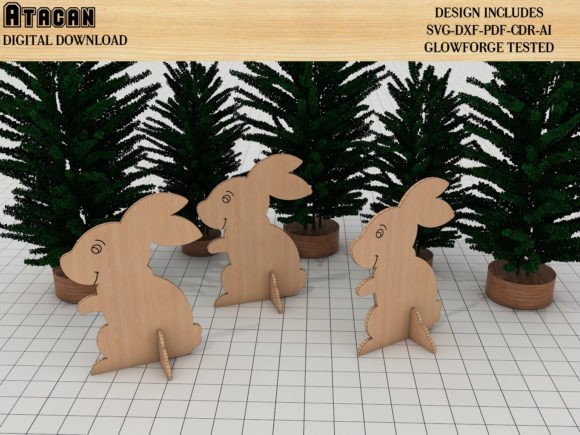
Creating intricate wooden assemblies requires more than just a powerful laser; it demands digital files engineered with exacting tolerances. The 3D Rabbit Puzzle Laser Cut Hare Animal represents a specific category of vector design where artistic form meets mechanical precision. Unlike standard 2D engravings, this project relies on interlocking friction fits that must account for material thickness, kerf width, and machine calibration. When executed correctly, the result is a stunning, freestanding sculpture that captures the anatomical elegance of a hare without requiring glue or fasteners.
This particular design ecosystem has been rigorously tested using a Glowforge Pro, ensuring that the baseline dimensions are accurate for one of the most popular hobbyist and prosumer lasers on the market. However, the utility of these files extends far beyond a single brand. Because the geometry is mathematically defined rather than device-specific, makers utilizing CO2 lasers, diode systems, and even blade-based cutting machines can achieve professional results by understanding how to adapt the provided formats to their specific workflow.
Universal File Formats for Diverse Workflows
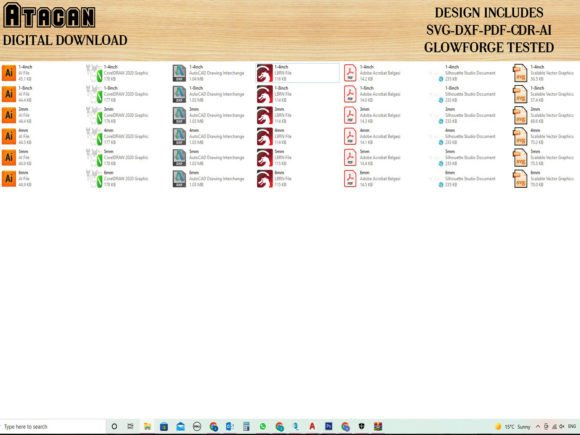
The versatility of modern fabrication lies in software agnosticism. A high-quality 3D Rabbit Puzzle Laser Cut Hare Animal project should never be locked into a proprietary ecosystem. This is why the inclusion of multiple vector standards is critical for seamless production across different platforms.
- SVG (Scalable Vector Graphics): The industry standard for web-based laser interfaces like Glowforge, xTool Creative Space, and LightBurn. SVGs maintain perfect scalability without pixelation, allowing you to resize the rabbit model while preserving the exact ratio of tab-and-slot joints.
- DXF (Drawing Exchange Format): Essential for users operating industrial CNC routers or older laser software that does not support SVG natively. DXF files strip away styling metadata, leaving pure geometric path data that ensures the cutter follows the intended line precisely.
- AI (Adobe Illustrator) & CDR (CorelDRAW): These native source files are invaluable for designers who wish to modify the hare’s aesthetic before cutting. You might want to add an engraved nameplate to the base or adjust the ear curvature. Having the original layer structure intact saves hours of redrawing.
- PDF: Often overlooked, PDF vectors serve as a universal bridge. Many print shops and fabrication services prefer PDF because it embeds fonts and paths securely, preventing accidental modifications during file transfer.
It is important to note that JPG files included in such packages are strictly for reference purposes. They provide a visual preview of the assembled 3D Rabbit Puzzle Laser Cut Hare Animal but contain no cuttable path data. Always verify you are loading the correct vector file into your machine's software to avoid wasted time and material.
Bridging Laser Cutting and Paper Craft Machines
While primarily designed for wood and acrylic, the precision of these vector files opens doors for paper crafting enthusiasts. Machines like Cricut, Silhouette Cameo, Sizzix, Brother ScanNCut, and Gemini operate on similar coordinate principles as laser cutters, albeit with blades instead of beams. Adapting a 3D Rabbit Puzzle Laser Cut Hare Animal for these devices requires specific considerations regarding material behavior.
Paper and cardstock have zero kerf compared to laser-cut wood, yet they possess grain direction and flexibility. When importing SVG or DXF files into Cricut Design Space or Silhouette Studio, users may need to slightly scale down slot widths to ensure a snug fit in fibrous materials. The advantage here is accessibility; crafters without access to expensive laser equipment can still participate in complex 3D modeling. For mixed-media artists, this compatibility allows for hybrid projects—perhaps a laser-cut wooden skeleton clad in intricately cut paper details produced on a Cameo.
Material Selection and Tolerance Management
The success of any interlocking puzzle hinges on the relationship between digital design and physical material. Since this 3D Rabbit Puzzle Laser Cut Hare Animal was tested on a Glowforge Pro, the default settings assume a specific kerf (the width of material removed by the laser beam). If you are using a different machine or a material with significantly different density, test cuts are mandatory.
Baltic birch plywood is generally the recommended substrate due to its consistent internal layers and minimal voids. MDF offers uniformity but lacks the natural grain character that enhances the organic feel of the hare sculpture. Acrylic presents a unique challenge; cast acrylic cuts cleanly but can be brittle at thin joint points, while extruded acrylic may melt and fuse slots together. Always measure your actual material thickness with digital calipers before sending the job. A nominal "3mm" plywood sheet might actually be 2.8mm or 3.2mm, and that 0.2mm variance is enough to make a friction-fit assembly either impossibly tight or structurally unsound.
Optimizing Assembly Through Digital Preparation
Before the laser ever fires, proper file preparation dictates the quality of the final 3D Rabbit Puzzle Laser Cut Hare Animal. Vector files often arrive with overlapping nodes or open paths that can confuse cutting software. Running a quick node cleanup in Illustrator, Inkscape, or LightBurn prevents double-cuts that widen slots unnecessarily.
Color coding is another practical workflow enhancement. Assign distinct colors to cut lines versus engrave lines within the SVG or AI file. This allows you to set power and speed parameters efficiently in your laser software. For the hare puzzle, consider adding subtle alignment marks or numbered identifiers on non-visible edges. During assembly, when dozens of similarly shaped rib pieces look identical, these small engraved cues transform a frustrating guessing game into a logical construction process.
Post-Processing and Finishing Considerations
Laser-cut wood emerges with charred edges, which can stain lighter surfaces during handling. For a pristine 3D Rabbit Puzzle Laser Cut Hare Animal, masking the material surface before cutting is highly recommended. Painter’s tape or specialized laser mask protects the face of the wood from smoke residue. After cutting, lightly sanding the tab edges removes carbon buildup and eases assembly friction.
Finishing should occur before final assembly whenever possible. Applying oil, wax, or sealant to individual flat pieces ensures complete coverage in areas that become inaccessible once the 3D form is locked together. Danish oil or beeswax enhances the natural grain contrast between the light wood face and the darkened cut edges, adding depth to the hare’s silhouette. Avoid water-based stains that might swell the wood fibers and alter the precise tolerances of the puzzle joints.
Commercial and Educational Applications
Beyond personal hobbyist use, the 3D Rabbit Puzzle Laser Cut Hare Animal serves functional roles in broader contexts. Makers selling at craft fairs find that 3D puzzles command higher perceived value than flat ornaments because customers can interact with them as kinetic sculptures. The ability to produce these consistently across compatible machines means inventory can be scaled reliably.
In educational settings, these files support STEM learning objectives related to geometry, structural engineering, and digital fabrication. Students learn about tolerance stacking, material properties, and CAD/CAM workflows through tangible problem-solving. The cross-platform compatibility—from high-end Glowforge units to classroom-friendly Cricut machines—makes this project accessible regardless of institutional budget constraints. Whether used for therapeutic mindfulness activities, retail product development, or technical education, the underlying value remains the same: precision-engineered digital files that translate seamlessly into physical reality across diverse manufacturing ecosystems.