3D Maze Puzzle Pages: Difficult Skill Assets
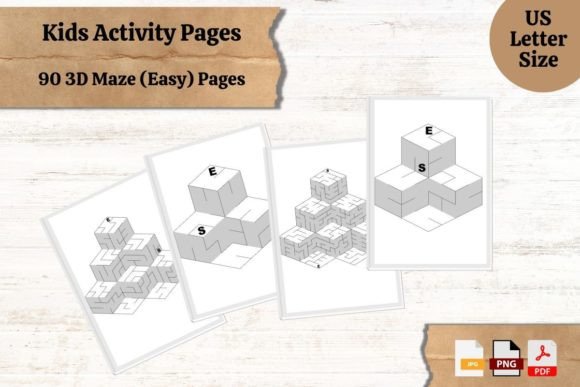
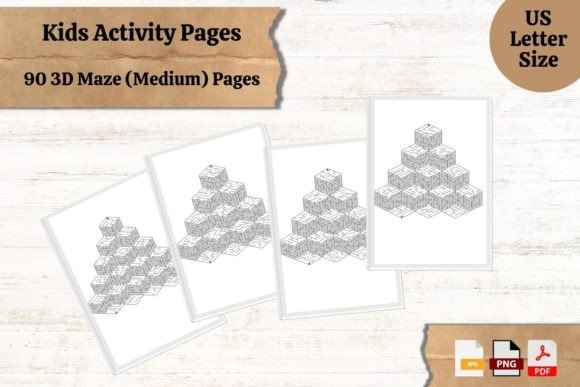
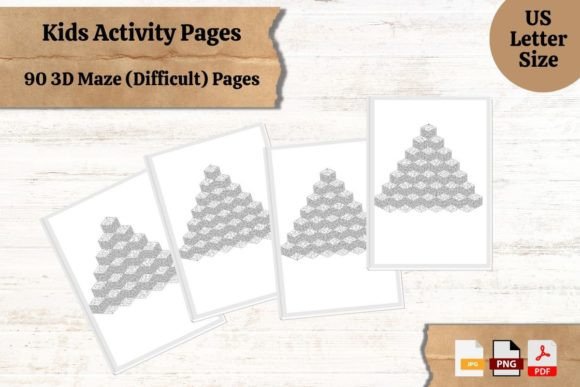
Creating engaging activity books or digital content requires more than just generic clip art; it demands assets that offer genuine cognitive value and visual intrigue. The 3D Maze Puzzle Pages - Difficult Skill collection addresses this need by providing high-resolution, complex spatial challenges suitable for a mature audience. Unlike standard two-dimensional mazes that rely solely on line tracing, these designs utilize isometric projection and shading to create depth, transforming a simple puzzle into an immersive visual experience. For publishers, educators, and content creators, this distinction is vital. The "difficult" skill level implies a target demographic that appreciates patience and problem-solving, making these pages ideal for adult activity books, senior cognitive therapy resources, or premium educational supplements.
The visual personality of these assets leans toward modern technical illustration rather than childish doodling. The clean lines and structured geometry allow them to integrate seamlessly into professional layouts without looking out of place next to sophisticated typography. Whether you are designing a KDP interior or a printable worksheet bundle, the aesthetic consistency of these 90 unique pages ensures your final product feels cohesive and professionally curated.
Strategic Applications in Publishing and Digital Products
Versatility is the primary advantage of acquiring a comprehensive asset pack like this. For self-publishers on Amazon KDP or Etsy, the 3D Maze Puzzle Pages - Difficult Skill set serves as a complete interior foundation. With 90 distinct puzzles and corresponding answer keys, you have enough volume to create a substantial paperback or spiral-bound activity book. The 8.5 x 11 US Letter trim size is the industry standard for this category, eliminating the need for resizing or reformatting. This ready-to-use format significantly reduces production time, allowing entrepreneurs to focus on cover design, keyword research, and marketing strategies rather than illustrating individual puzzles from scratch.
Beyond traditional publishing, these assets hold significant value for digital product creators. Bloggers and niche site owners can use individual pages as lead magnets to build email lists. A "Free Printable Brain Teaser" is a high-conversion incentive for audiences interested in logic games, homeschooling, or mindfulness. Teachers and tutors can incorporate specific sheets into lesson plans or reward systems, while therapists might use them as tools for cognitive rehabilitation or focus training. Because the files are provided in PNG, JPG, and PDF formats, they adapt easily to various platforms, from Canva templates to direct download storefronts.
Evaluating Visual Hierarchy and Design Integration
When incorporating complex visual assets into a layout, understanding how they interact with text and whitespace is essential. These 3D mazes are visually dense, meaning they command attention. In editorial design or workbook formatting, treat each puzzle as a primary focal point. Surrounding the maze with ample margin space prevents the page from feeling cluttered and enhances readability. This negative space also provides room for instructions, difficulty ratings, or branding elements.
Typography pairing plays a crucial role in elevating the perceived value of these puzzles. Since the mazes feature precise, geometric lines, they pair exceptionally well with clean sans serif fonts for headers and instructions. A modern typeface reinforces the contemporary feel of the 3D illustration. Conversely, if you are aiming for a vintage or retro puzzle book aesthetic, a sturdy serif font can create an interesting contrast, suggesting a classic "brain teaser" vibe. Avoid overly decorative script fonts for functional text, as they may compete with the intricate details of the maze paths. The goal is to let the 3D Maze Puzzle Pages - Difficult Skill remain the star of the page while the typography supports navigation and clarity.
Technical Specifications and File Management
Understanding the technical deliverables ensures a smooth workflow from acquisition to publication. This package includes three distinct file types, each serving a specific purpose in the design process:
- PDF Files: Best for print-ready interiors and digital distribution. The vector-based nature of PDFs (when applicable) or high-res rasterization ensures crisp edges at 8.5 x 11 dimensions. Use these for KDP uploads or direct-to-consumer printable downloads.
- PNG Files: Ideal for layered design work in software like Photoshop, Affinity Photo, or Canva. PNGs support transparency, allowing you to place mazes over colored backgrounds or textures without unsightly white boxes. This is particularly useful for creating social media graphics or custom worksheet layouts.
- JPG Files: Useful for quick previews, web display, or compatibility with older software. While less flexible than PNGs for layering, they are universally supported and often have smaller file sizes for faster loading in digital catalogs.
The inclusion of 90 separate answer sheets is a critical quality-of-life feature for both the creator and the end-user. Never publish a puzzle book without solutions; it diminishes trust and usability. Having pre-matched answer keys saves hours of manual verification. When organizing these assets, maintain a clear folder structure separating puzzles from solutions to prevent accidental mismatches during the layout phase.
Commercial Considerations and Project Fit
Before integrating these assets into a commercial project, evaluate the alignment between the "Difficult Skill" designation and your target audience. These are not simple trace-the-line activities for toddlers. The complexity suits teens, adults, and seniors looking for genuine mental stimulation. Mislabeling this product as "easy" or "kids only" will likely result in negative reviews and returns. Transparency about difficulty builds brand credibility and attracts the right customers.
It is also important to note the licensing scope regarding covers. This listing provides the interior content only. As a publisher or designer, you must source or create a separate cover that matches the quality and tone of the interior. A low-effort cover paired with high-quality 3D mazes creates a disconnect that hurts sales. Invest time in designing a cover that showcases a sample maze or uses complementary 3D typography to signal the premium nature of the content inside.
Finally, consider the long-term value of owning perpetual assets versus subscription-based stock. Owning these 90 pages outright means no recurring fees and no risk of licensing changes affecting existing products. For small business owners and indie publishers building a catalog of activity books, this ownership model supports sustainable scaling. You can repurpose individual mazes across multiple projects—using one set for a holiday-themed book and another for a general logic puzzle compilation—maximizing the return on investment while maintaining consistent quality standards.
Whether used as a standalone product or part of a larger educational ecosystem, the 3D Maze Puzzle Pages - Difficult Skill collection offers a practical solution for creators who value both efficiency and engagement. By focusing on proper layout integration, appropriate audience targeting, and strategic file usage, these assets can become a cornerstone of a profitable and respected creative portfolio.