Evaluating 2D 3D Shape Flashcards for Early Geometry Education
Selecting the right geometry resources for early childhood education requires balancing visual clarity, tactile engagement, and practical durability. When educators and parents research tools to introduce spatial concepts, the distinction between flat representations and volumetric understanding becomes a primary decision factor. A comprehensive 2D 3D shape flashcard set serves as a bridge between these two cognitive stages, offering a structured approach to identifying forms before transitioning to physical manipulation. Understanding the specific utility of this format helps determine whether it aligns with your current homeschool curriculum, preschool lesson plans, or Montessori environment.
Distinguishing Features of Combined Dimension Sets
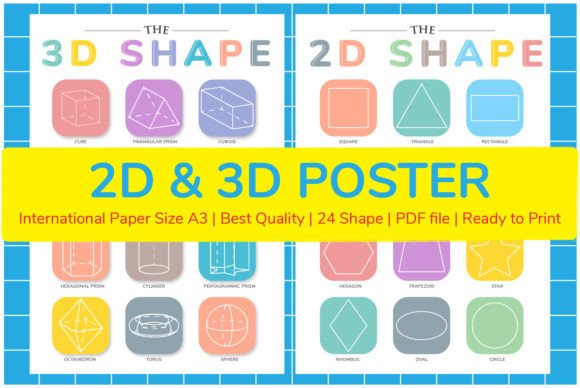
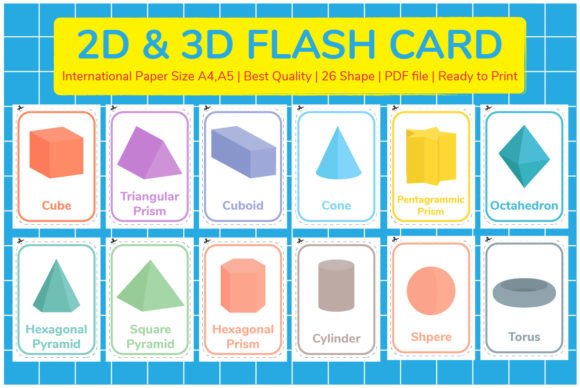
Standard shape cards often focus exclusively on planar geometry, presenting circles, squares, and triangles in isolation. While foundational, this approach can sometimes create a disconnect when children encounter real-world objects that possess depth. A dedicated 2D 3D shape flashcard resource integrates both dimensions into a single learning sequence. This dual-format approach supports cognitive scaffolding, allowing learners to associate the flat face of a cube with the square card, or the circular base of a cylinder with its 2D counterpart.
The specific set comprising 26 distinct shapes offers a broader vocabulary than many basic sets, which typically cap at 10 to 15 common forms. This expanded range is particularly relevant for advanced preschoolers or kindergarten preparation where geometric vocabulary extends beyond basics to include trapezoids, rhombuses, cones, and spheres. For adults evaluating resources, the inclusion of both dimensional types in one cohesive set reduces the need to source separate materials, streamlining lesson planning and ensuring visual consistency across the learning module.
Comparing Flashcards to Manipulatives and Digital Tools
When researching geometry instruction methods, flashcards are frequently compared against solid manipulatives and digital applications. Each modality serves a different function in the learning hierarchy. Solid wooden or plastic 3D shapes provide essential tactile feedback and weight, which are critical for sensory integration and true spatial reasoning. However, they are often expensive, bulky to store, and limited in variety due to manufacturing constraints.
In contrast, a 2D 3D shape flashcard set provides high-variety visual exposure at a lower cost and with greater portability. They excel at rapid identification, vocabulary building, and sorting activities that would be cumbersome with heavy blocks. Digital apps offer animation and interactivity but lack the fine motor component of handling physical cards. The most effective educational environments often utilize flashcards as the primary tool for naming and recognition, while reserving physical manipulatives for deeper exploration of volume and balance. If your goal is immediate vocabulary acquisition and visual discrimination, cards are often the more efficient starting point. If the goal is engineering or physics-based play, solids take precedence.
Evaluating Print Quality and Material Longevity
For printable resources, the long-term value is entirely dependent on material choices and preparation. Unlike pre-manufactured products, DIY flashcards require an upfront investment of time and supplies to achieve comparable durability. When evaluating this option against store-bought alternatives, consider the frequency of use. For daily classroom or homeschool rotation, printing on standard paper is rarely sufficient; edges fray quickly, and surfaces stain.
It is highly recommended to print on cardstock and apply heavy laminates for reusability and longevity. Cardstock provides the necessary rigidity for small hands to grasp without bending, mimicking the feel of commercial products. Heavy lamination protects against moisture, saliva, and repeated handling. While this adds to the initial cost and preparation time, it transforms a disposable paper product into a permanent teaching asset. Families or educators who anticipate using these materials for multiple children or over several years will find that the per-use cost of properly prepared printable cards is significantly lower than retail options, provided they have access to the necessary finishing equipment.
Safety Considerations and Preparation Guidelines
A unique advantage of printable flashcard sets is the ability to customize safety features during the assembly process. Manufactured cards often come with sharp, die-cut corners that can be hazardous for toddlers or children with sensory sensitivities. When preparing a 2D 3D shape flashcard set at home, you have full control over the final form factor.
Using scissors on a predetermined line so that the shape is not sharp is a critical safety step. Rounding the corners manually during the cutting phase eliminates poke hazards and makes the cards more comfortable for small hands to hold and shuffle. This level of customization is impossible with mass-produced items. Furthermore, the act of cutting along guided lines can serve as a secondary fine motor activity for older siblings or assistants involved in the preparation process. When comparing options, this adaptability makes printable sets superior for mixed-age groups or environments where safety standards are paramount.
Integration into Diverse Educational Philosophies
The versatility of a 26-card shape set allows it to fit various pedagogical frameworks, though the application differs by philosophy. In traditional homeschool settings, these cards often serve as direct instruction aids for morning baskets or circle time, focusing on explicit naming and matching. The structured nature of flashcards aligns well with curricula that emphasize sequential skill mastery and vocabulary retention.
In Montessori environments, the approach is typically more child-led. Here, the same 2D 3D shape flashcard materials might be used for self-directed sorting trays, nomenclature cards, or memory games rather than teacher-led drills. The clean visuals and isolated concepts support the Montessori principle of isolating difficulty. However, purists may prefer materials made from natural wood over laminated paper. Educators must weigh the aesthetic alignment with their philosophy against the practical benefits of variety and affordability. For Reggio Emilia approaches, these cards can serve as provocation materials on light tables or as references during art projects involving geometric construction.
Decision Factors: When to Choose Printable Cards
Determining whether this specific type of resource is the right fit involves assessing your current inventory and learning objectives. A 2D 3D shape flashcard set is likely the optimal choice if you are introducing geometry concepts for the first time and need a comprehensive visual reference. It is also ideal for travel, therapy sessions, or supplementary practice where portability is key. The 26-shape count provides enough depth to prevent boredom without overwhelming a novice learner.
Conversely, this format may be insufficient if the child has already mastered shape identification and requires complex spatial problem-solving tasks. In such cases, tangrams, pattern blocks, or open-ended building sets offer higher ceilings for engagement. Additionally, if you lack access to a quality printer, laminator, and rounding tools, the effort-to-reward ratio may favor purchasing a pre-made set. Adults should also consider the child’s learning style; highly kinesthetic learners may find static cards frustrating without accompanying physical objects to manipulate simultaneously.
Practical Application and Activity Planning
To maximize the return on investment for printable shape resources, planning should extend beyond simple flash drills. Effective utilization involves integrating the cards into multi-sensory activities that reinforce the connection between the 2D image and the 3D concept. Sorting games where children match the card to a household object (e.g., matching the sphere card to a ball) bridge the gap between abstract representation and concrete reality.
Tracing activities using dry-erase markers on laminated cards add a fine motor component to visual learning. Scavenger hunts encourage environmental awareness and transfer of knowledge. For toddlers, simply holding and turning the cards builds hand strength and coordination. By viewing the 2D 3D shape flashcard set as a flexible toolkit rather than a rigid curriculum, educators can adapt the resource to meet evolving developmental needs. This adaptability is often the deciding factor for families seeking sustainable, long-term educational materials that grow with the child.
Ultimately, the decision to utilize printable geometry cards rests on a balance of budget, preparation willingness, and educational goals. They offer a distinct middle ground between expensive manipulatives and passive screen time, providing active, hands-on learning with significant customization potential. By carefully considering material quality, safety modifications, and pedagogical alignment, adults can effectively leverage these tools to build a strong geometric foundation for young learners.