Evaluating the KDP Isometric Paper Interior for Self-Publishing
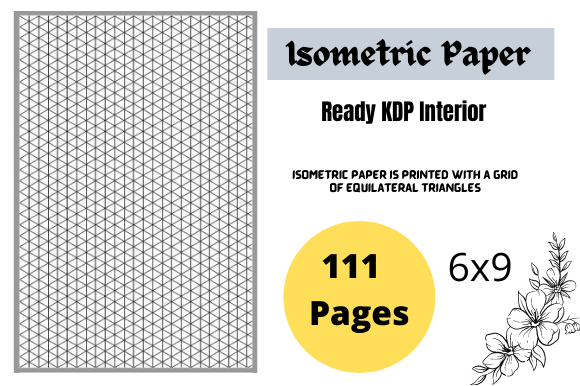
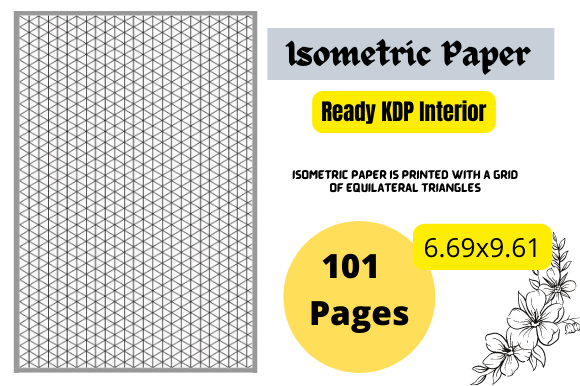
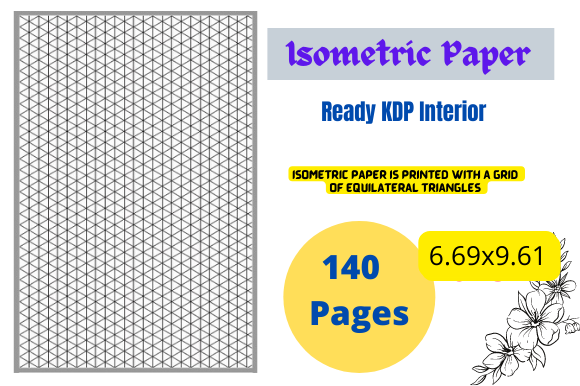
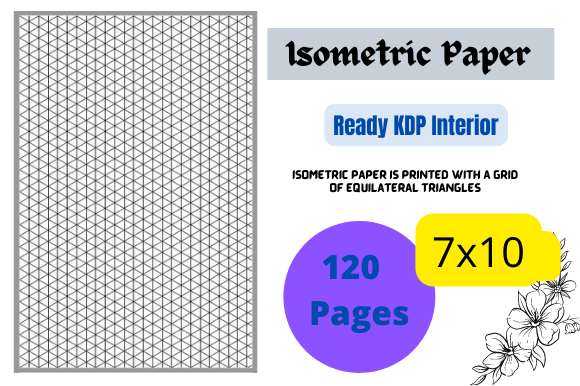
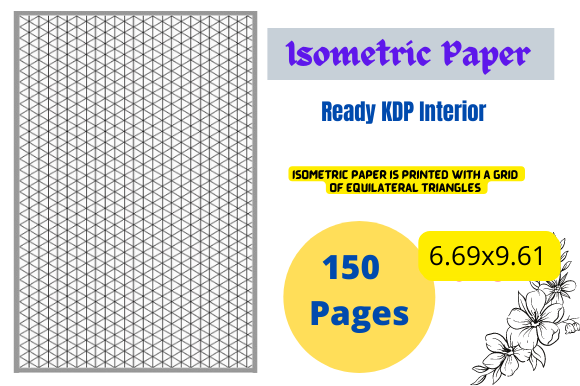
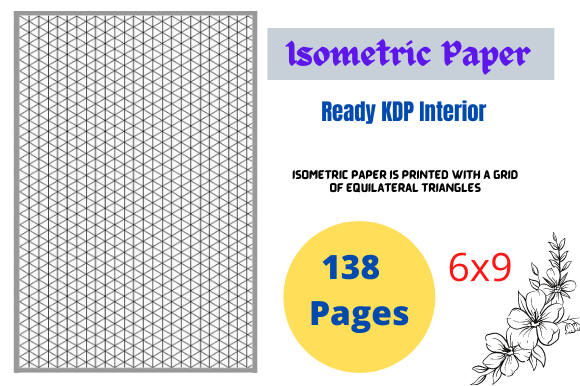
Selecting the correct interior template is a critical step for authors and creators publishing low-content books through Amazon Kindle Direct Publishing (KDP). While standard graph paper and lined notebooks dominate the market, specialized formats like the KDP Isometric Paper Interior serve distinct niche audiences. This specific format is printed with a grid of equilateral triangles, typically measuring .28 inches per side, creating a triangular tessellation that facilitates three-dimensional representation on a two-dimensional surface. Understanding the specific utility, technical specifications, and appropriate use cases for this interior is essential for determining whether it aligns with your publishing goals or project requirements.
Understanding the Isometric Grid Structure
The defining characteristic of this interior is the geometric precision of the triangle grid. Unlike standard isometric dot grids which rely on visual alignment between spaced points, a full-line triangular grid provides continuous guides. The .28-inch measurement is significant because it offers a balance between detail and usability. This scale is large enough to allow for legible annotations and comfortable sketching but small enough to accommodate complex architectural plans or detailed mechanical diagrams within a 6x9 inch trim size. For users evaluating this format, it is important to recognize that this is not merely aesthetic; the equilateral triangle structure enforces true isometric projection, where all three axes are equally foreshortened at 120-degree angles. This eliminates the guesswork often associated with freehand 3D sketching on blank or square-grid paper.
Primary Use Cases and Audience Fit
Evaluating the viability of a KDP Isometric Paper Interior requires identifying who will actually use it. The audience for this product is narrower than general stationery buyers but often demonstrates higher intent and specific needs.
Architecture, Landscaping, and Spatial Design
Professionals and students in spatial design fields utilize isometric grids to visualize volume without the distortion of perspective drawing. For landscaping, this grid allows for the planning of garden beds, hardscaping, and topography in a way that represents height and depth accurately. Architects may use this 6x9 format as a portable field notebook for initial concept ideation before moving to digital CAD software. If your target demographic includes design students or hobbyist architects, this interior provides immediate functional value that blank paper cannot offer.
3D Printing and Engineering Planning
A rapidly growing segment for isometric paper is the 3D printing community. As schools, colleges, and makerspaces increasingly offer 3D printing facilities, the need for analog planning tools has risen. Before committing to a digital model, designers often sketch modifications, assembly mechanisms, or structural supports. The triangular grid mirrors the layer-by-layer logic of additive manufacturing and helps in visualizing support structures. A KDP Isometric Paper Interior positioned toward this demographic serves as a bridge between conceptualization and digital fabrication.
Artistic Exploration and Recreational Geometry
Beyond technical applications, there is a recreational market inspired by artists like M.C. Escher. Enthusiasts enjoy drawing impossible objects, labyrinths, staircases, and optical illusions that rely on strict isometric geometry. Additionally, educators teaching solid geometry may find this format useful for helping students understand polyhedra, cross-sections, and spatial reasoning. In these contexts, the paper serves as both a creative medium and an educational scaffold.
Technical Specifications and KDP Compliance
For publishers, technical readiness is as important as content relevance. The specified 6x9 inch dimension is a versatile trade paperback size that balances portability with adequate drawing space. When evaluating a pre-made KDP Isometric Paper Interior, verify that the file is a bleed-ready PDF. Because the grid extends to the edge of the page in many designs, proper bleed settings (typically 0.125 inches added to each outer edge) are mandatory to prevent white borders after trimming.
Furthermore, ensure the content is newly generated and unique. Amazon’s algorithms actively flag duplicate interiors across multiple titles. Using a verified, unique file prevents account warnings and ensures the book remains available. The specification of "1 File Ready Interior" implies a streamlined upload process, but publishers should always preview the PDF using KDP’s previewer tool to confirm that the .28-inch grid lines remain crisp and do not appear pixelated or too faint when printed via standard offset or digital printing methods.
Benefits Versus Tradeoffs
Choosing this interior involves weighing specific advantages against inherent limitations.
- Precision vs. Flexibility: The primary benefit is the enforcement of geometric accuracy. However, the tradeoff is rigidity. Users cannot easily switch between isometric, dimetric, or trimetric projections. If a user needs multi-view orthographic projection, this single-purpose grid may be limiting.
- Visual Guidance vs. Ink Bleed: Continuous line grids provide superior guidance compared to dot grids. However, dense line work can sometimes compete visually with the user's sketch, especially if printed in dark black rather than grey. Publishers must evaluate line weight carefully to ensure the grid aids rather than obscures the drawing.
- Niche Demand vs. Market Saturation: While less saturated than lined journals, the isometric niche is competitive. Success depends on accurate keyword targeting and cover design that clearly communicates the specific .28-inch scale and intended use case.
When to Consider Alternatives
Despite its utility, the KDP Isometric Paper Interior is not universally applicable. Evaluators should consider alternatives in the following scenarios:
- General Note-Taking: If the book is marketed as a hybrid journal/sketchbook, a pure isometric grid can hinder writing. Lined or dotted pages are superior for text-heavy content.
- Perspective Art: Artists focusing on realistic perspective with vanishing points will find isometric grids counterproductive, as isometric projection lacks convergence. Perspective grid templates or blank paper are better choices.
- Large Scale Drafting: The 6x9 trim size restricts the physical scope of drawings. For users requiring expansive workspace, an 8.5x11 format would be more appropriate, making the 6x9 isometric interior unsuitable for professional drafting despite its portability.
Making the Final Decision
Determining whether to proceed with a KDP Isometric Paper Interior ultimately depends on alignment between the product specifications and the identified user problem. If the goal is to serve 3D printing enthusiasts, architecture students, or geometric artists who require a portable, precise, and compliant 6x9 sketching surface, this format is a strong candidate. The .28-inch equilateral triangle specification offers a practical middle ground for detail and scale.
However, publishers must validate that the specific PDF file meets all current KDP bleed and margin requirements and that the cover design accurately sets expectations regarding the grid type. By focusing on the functional evaluation of the grid rather than generic descriptions, creators can produce resources that genuinely assist their audience in visualization and design tasks. Thorough evaluation of these factors ensures that the final published book is not just another notebook, but a specialized tool that meets the rigorous demands of technical and artistic users.